Free printable from a child clinical psychologist
Boundaries Worksheets: help your child know what feels okay and find the words to say no
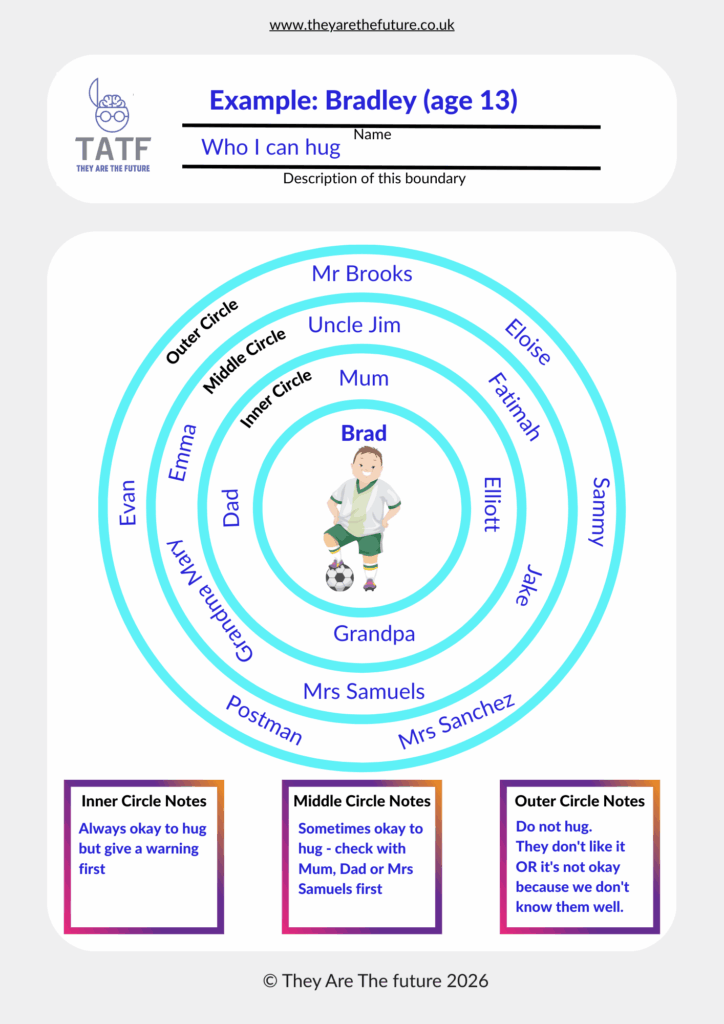
A child who knows their own boundaries is better able to speak up when something feels uncomfortable, whether with friends, online or at home. These worksheets use a circle chart to help your child sort what is always okay, what needs some thought and what is a no. They work for children and teens, and for you as a parent too.
Your worksheets will arrive in your inbox within a few minutes.
By clicking "Send me the free worksheets", you agree to the Terms and Privacy Policy. You also agree to join They Are The Future's email list and receive twice-weekly emails. We promise to send you only helpful and informative emails linking to our resources, and we do not send spam. You can unsubscribe at any time, using the link in each email.
Need help? Email [email protected]
What's inside
- A blank circle worksheet to print as often as you need, for one boundary at a time, such as hugs, lending things or late-night messages
- Three completed examples to guide you: a 13-year-old, a 15-year-old and an adult practising saying no
- Your child ends up with their own clear picture: always okay, think first, or no

From me
I'm Dr Lucy Russell, a child clinical psychologist with over 20 years of clinical experience. I have used boundary circles in clinic for years. Thinking a boundary through in a calm moment makes it easier for a child to speak up when it matters.
"Lucy took great care to listen to us carefully, identify the issues and help us understand our son's behaviour."Parent at Lucy's Clinic, Everlief Child Psychology

© 2026 They Are The Future